How I'd grow Motion
June 29, 2026

Motion is a product that lets anyone create motion design from just a prompt.
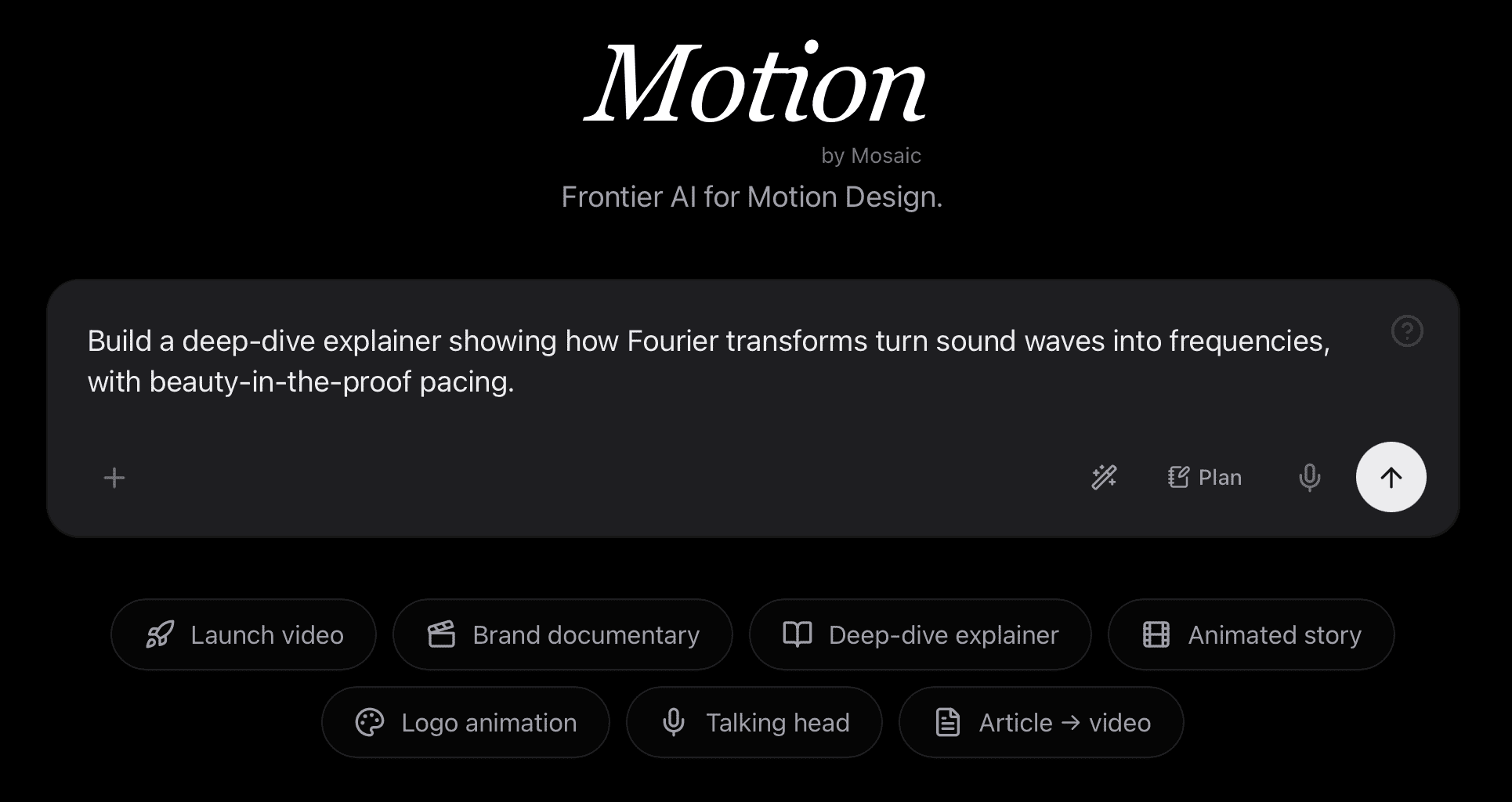
To do what? There are a few example prompts you can try on the landing page using a text box. The problem is that when you do that you don't see the result but instead get a popup asking you to sign up.
Will I be able to see the video then? Do I need to pay or do I get some free credits? The popup doesn't say so most people will probably just abandon the page at this step because they're not convinced yet.
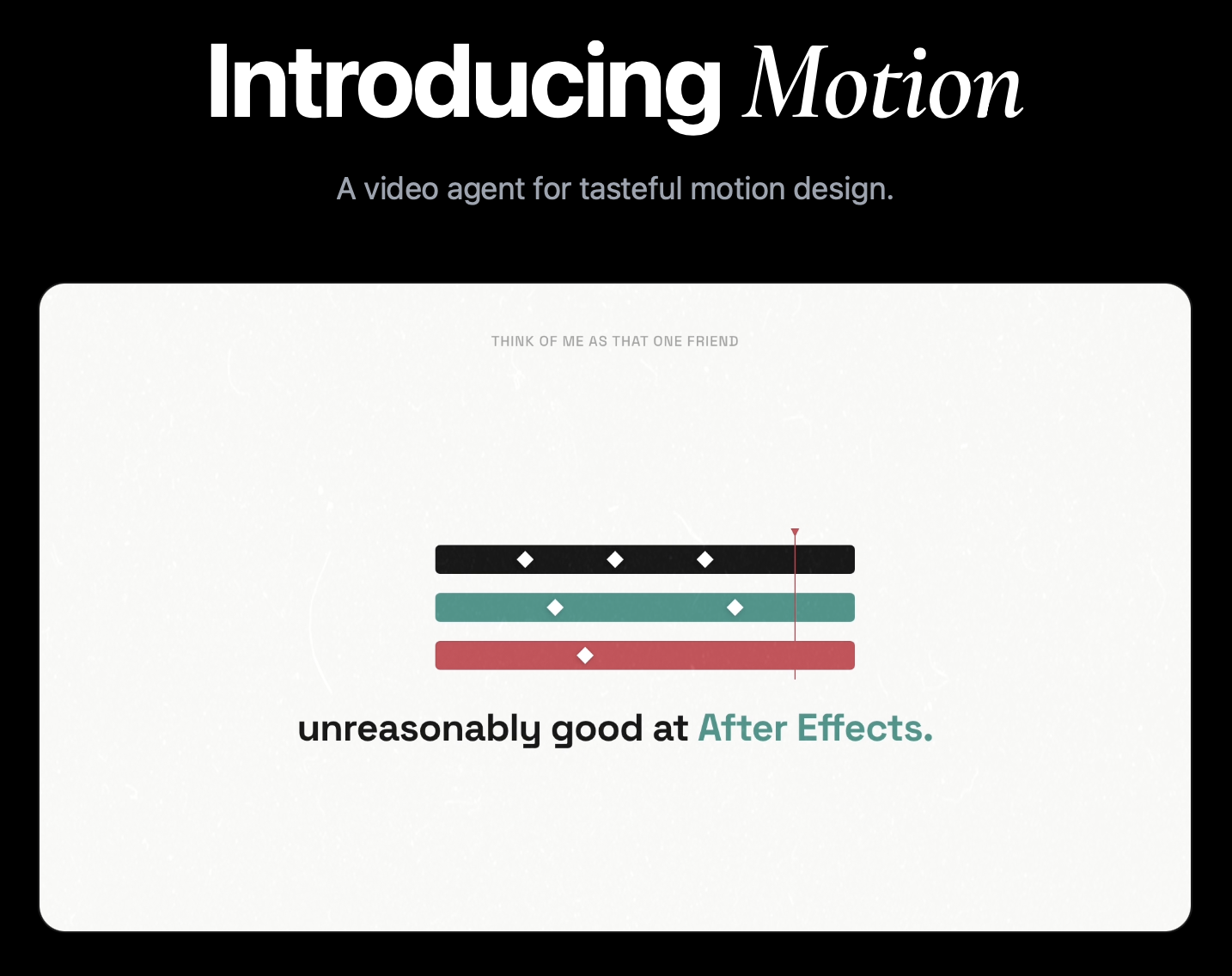
What's funny is that the site of the other video editing tool made by the same company that makes Motion actually has a good hero with a demo video that clearly shows the product in action.
It shows how the agent does the research, design, motion, voiceover and editing all in one place and the video absolutely deserves to be front and center on the Motion landing page too.
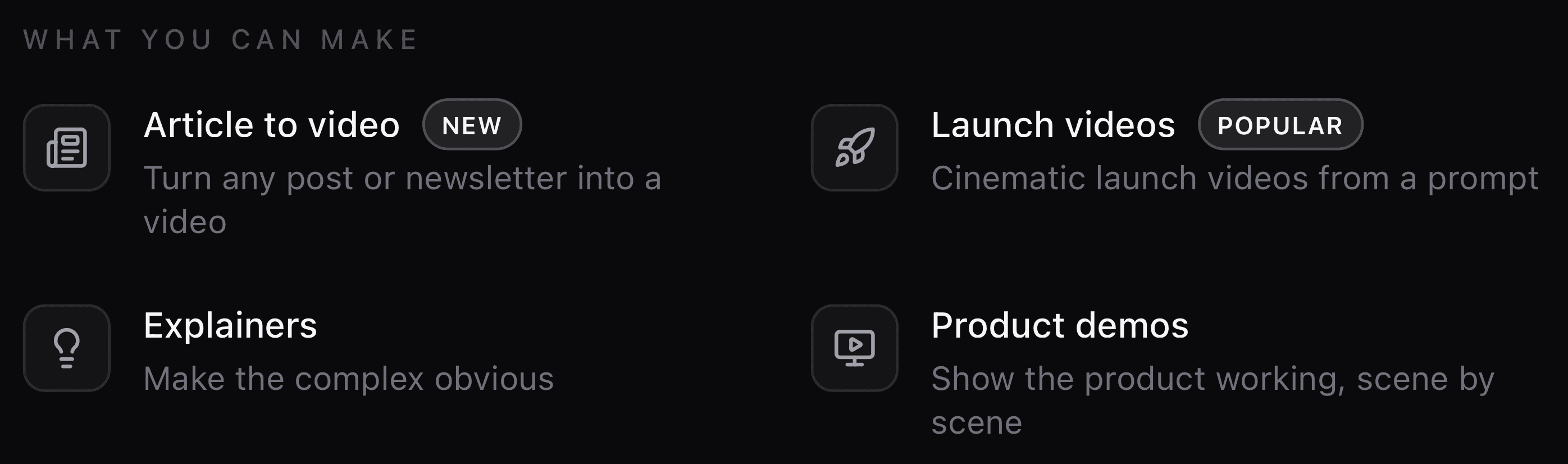
What I think Motion's biggest challenge is right now is finding its true identity. They can keep being a product that does a lot of different things but in my opinion at some point they should focus on one specific job to be done. What they decide will also influence a lot of strategic marketing decisions.
There could be a lot of directions they could take and ultimately this depends on a combination of who they think will get the most value from the product and what's best for the business.
Launch videos for example are a cool use case but once it's done there's no need to use the product anymore.
On the other hand there are use cases like helping YouTubers make better videos or media companies turn their existing assets into social media content. That could be something where once a customer is acquired they stay with Motion for a long time since they'll continue producing content on a regular basis.
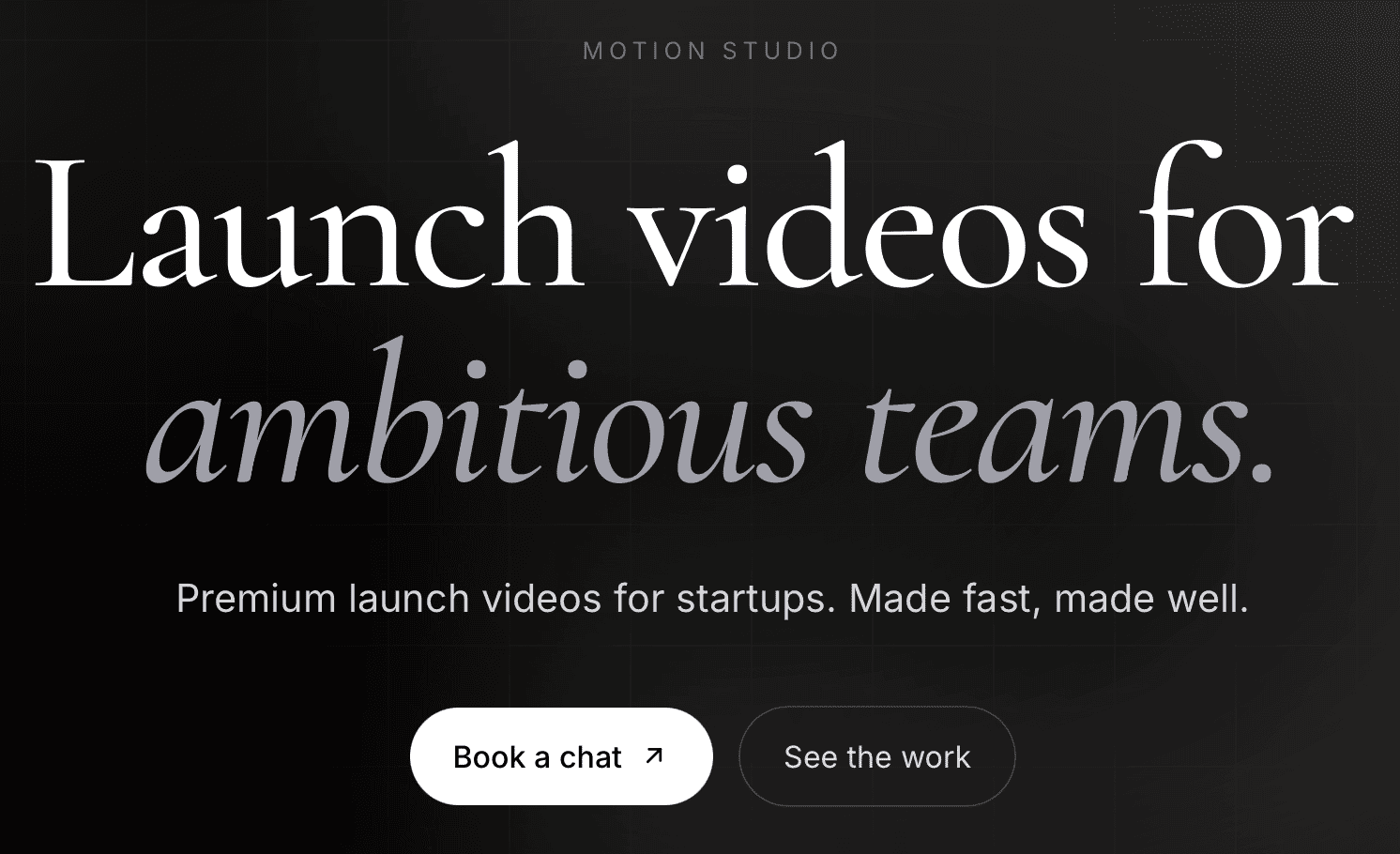
What I personally found a bit confusing is seeing that they also use the Motion landing page to promote their own internal video agency.
It was weird because it gave me the impression that at the end of the day I'll still need to get a human involved to make a good video.
I really like how one of the founders is leveraging his personal profile on social media to show in public what the product can do. This is actually something I always recommend doing for new products when there's a visible output that can be shared.
Basically what he does is browse social media posts made by people he believes could be Motion's ideal customers to find things that could be expressed well with a video. Then he builds a video for free for them and posts it as a comment under the original post.
The real benefit of this tactic is that not only is he basically doing a sales demonstration of his product in public but it will also be seen by people who follow the original poster who might very well belong to their ideal customer bracket too.
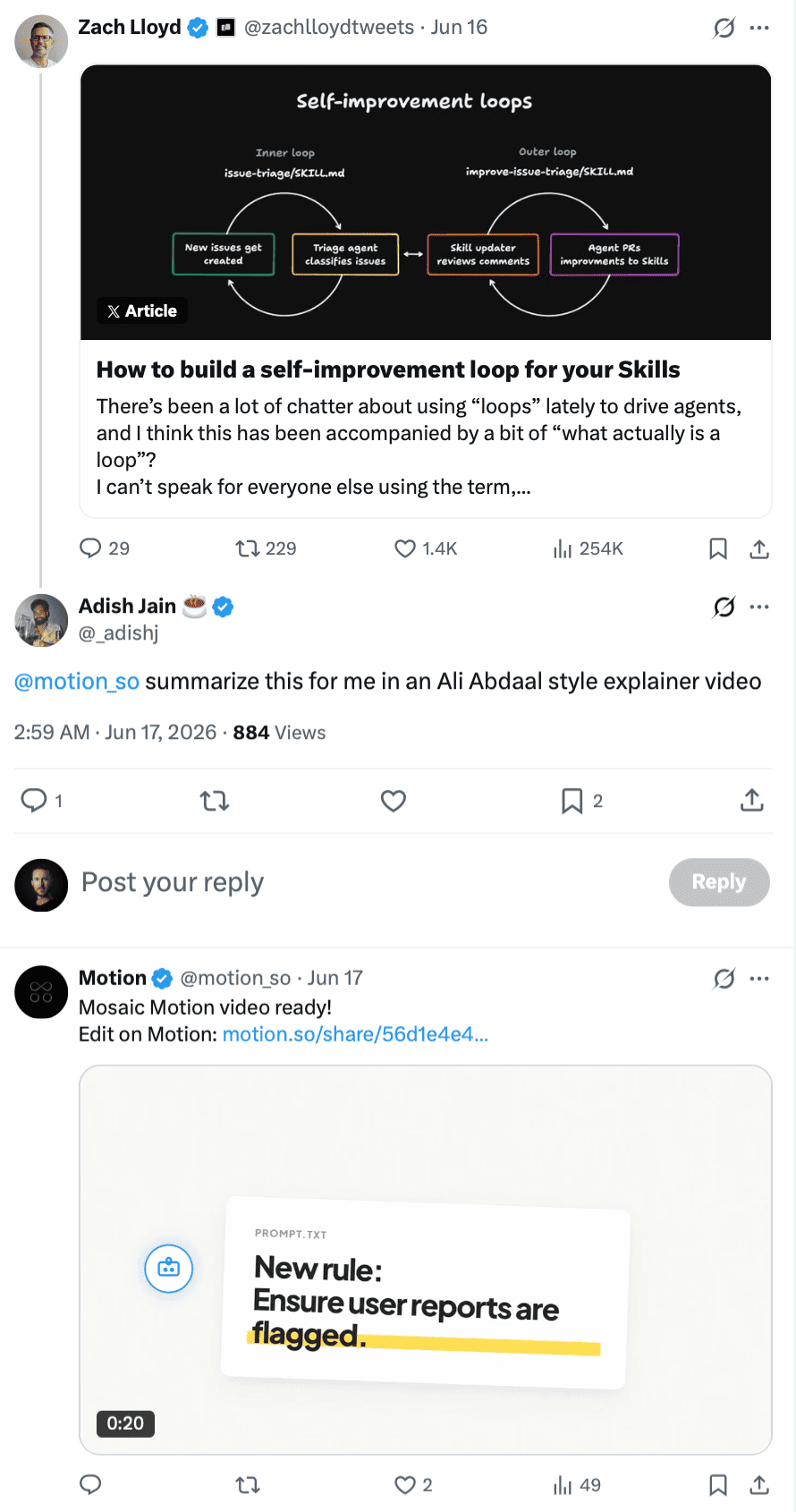
What I'd question is whether the platforms they're active on with the product account are the ones where their ideal customers actually hang out.
And that ties back to the problem I mentioned at the beginning. It feels like they haven't defined who their ideal customers are yet so they're trying to get as many people as they can on board.
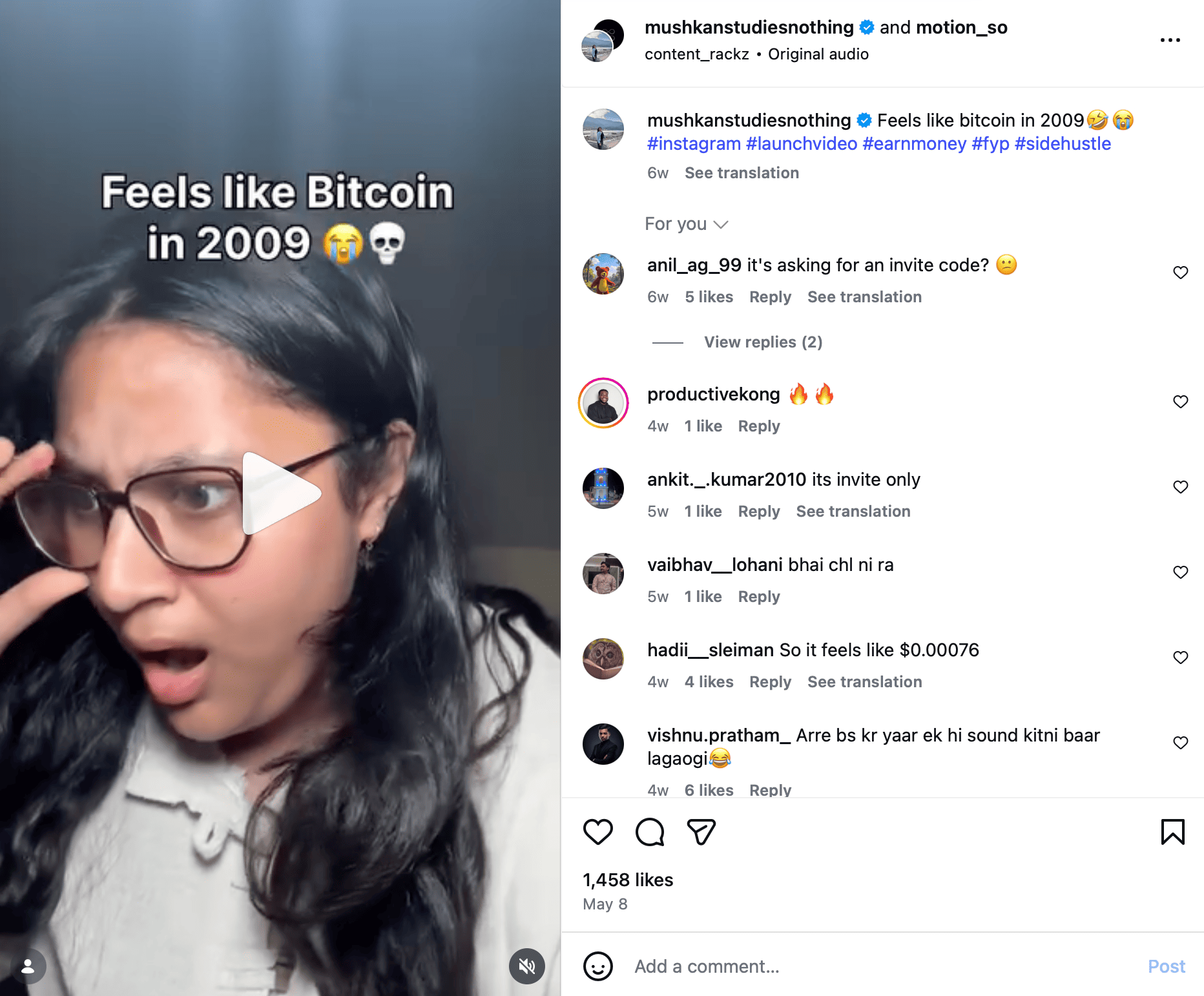
Take Instagram for example. It's a very consumer focused platform.
Some of the posts that seem to have done well on the surface (at least looking at impressions) make me question whether they attract the right audience though.
After clicking through most of the profiles of the people who engage with their content I have some doubts.
I'm not sure positioning Motion as a tool to help people make easy money online by creating and reselling videos is a good idea if they want to attract quality customers.
Let's set social media aside for a moment and go more bottom of the funnel where conversions really happen.
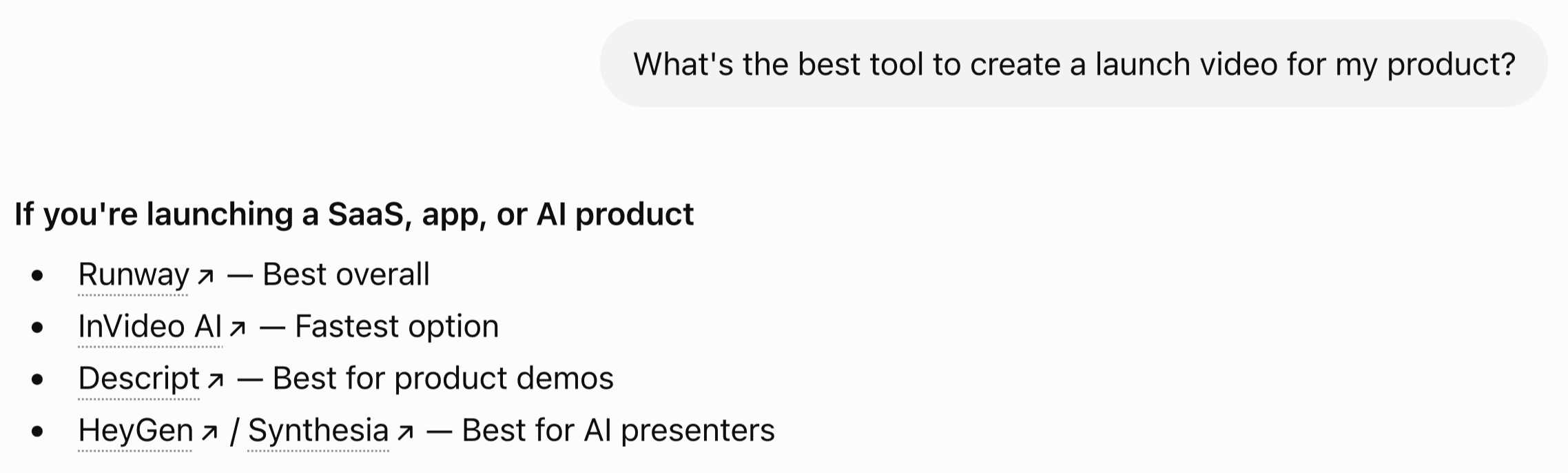
Imagine for a second that someone opens ChatGPT, Google or any other AI search tool and asks what's the best product to create a launch video. Motion would of course want to appear in that list.
Right now it's not there. So what should they do to get a chance of appearing in it? By building a brand that's strongly associated with that use case.
How can they do that? I like using a framework that I call "you say it - they say it."
Step 1 tells the bots what you want to be known for. Step 2 is the rest of the internet agreeing.
Step 1 is the "you say it" part: focused messaging across Motion's owned properties.
This means having content that can be indexed by search engines on properties they control.
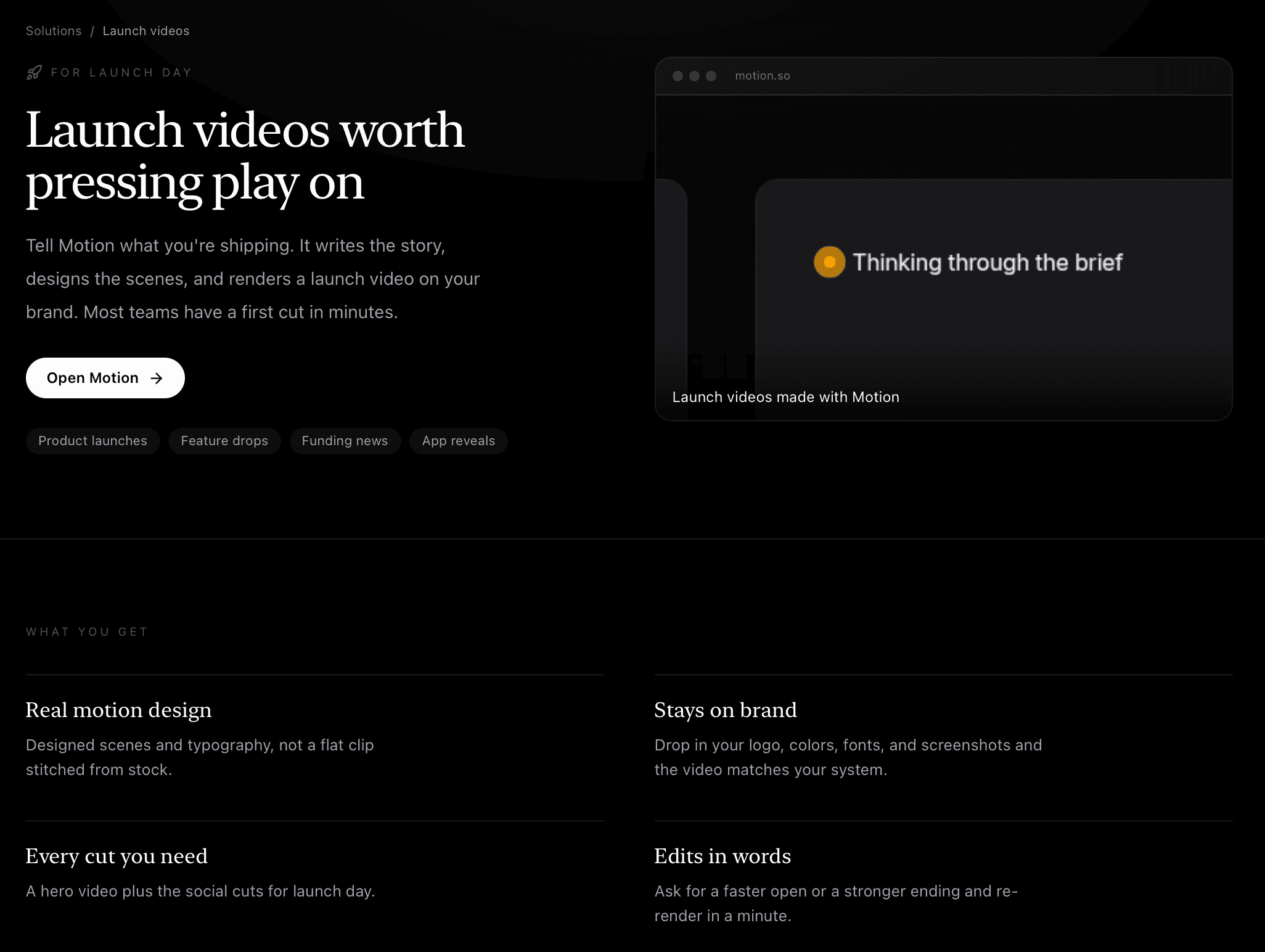
Motion has a dedicated landing page but it has a few problems. First of all it's not communicating to the bots that this is actually one of the product's features. For example the page title is "Launch videos worth pressing play on" while it should be something like "Product launch video generator" or something similar depending on what people search for.
Then the content on the page is way too thin. The unique body copy is barely 100 words: a headline, a 30-word intro and four single-sentence feature blurbs. That's far below what competing pages offer. There's no substantive content a search engine can index for "launch video" intent: no explanation of how it works, no examples, pricing, use cases, comparisons or FAQs that would give the page topical depth.
Step 2 is the "they say it" part: this means having real people talk about that Motion's specific feature on third-party sites.
Everything on their own pages is just a claim. Of course they can say they make the best launch videos. What moves the needle is corroboration. Independent sources tying Motion to "launch video" when Motion isn't the one talking. This matters even more for AI search which doesn't take your landing page at its word. It aggregates what the whole web says and surfaces the names that come up most across credible sources.
In practice this means appearing on listicles on trusted sites ("best launch video tools"), reviews on sites like G2 and Product Hunt, mentions in YouTube tutorials made by creators, being cited in Reddit threads and so on. It's not only about links.
So what Motion needs to focus on is building relationships with third party players. This means a strong focus on outreach and engagement both through free and paid activities.
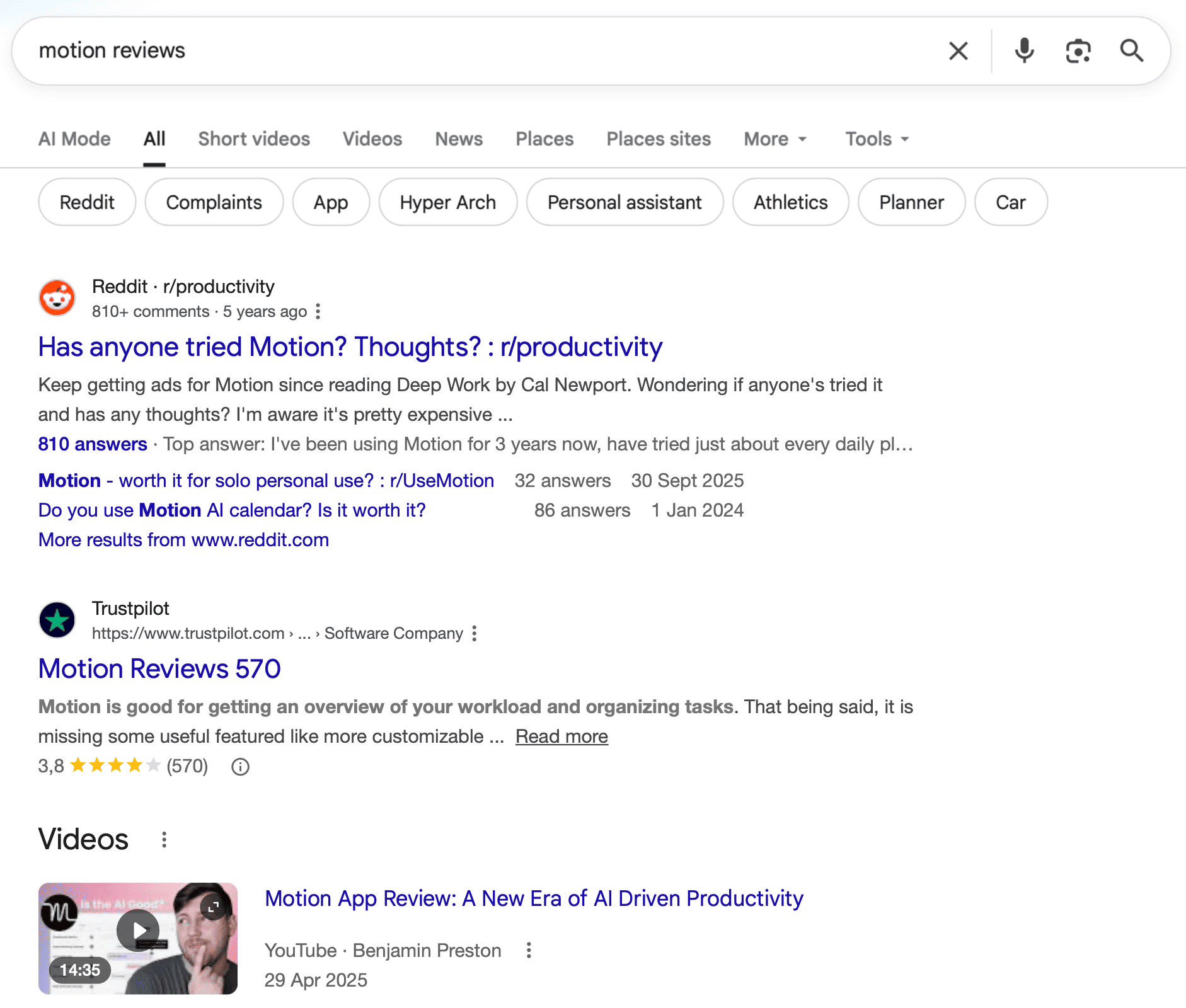
What they could also do is incentivize existing users to talk about the product online. This would have a double effect by directly driving referrals through word of mouth and indirectly improving search by establishing trust through repeated mentions.
Considering the nature of the product I think this might work especially well because people would naturally want to show others what they created. So a program like “show the world your video and tag us in exchange for free credits" or similar initiatives might drive a significant amount of brand awareness.
