How I'd grow Flint
April 20, 2026

Flint is a product that lets marketers create a lot of different pages quickly while matching the existing brand.
Their AI looks at a site and clones its component system so the new pages look like they were made by the same designers.
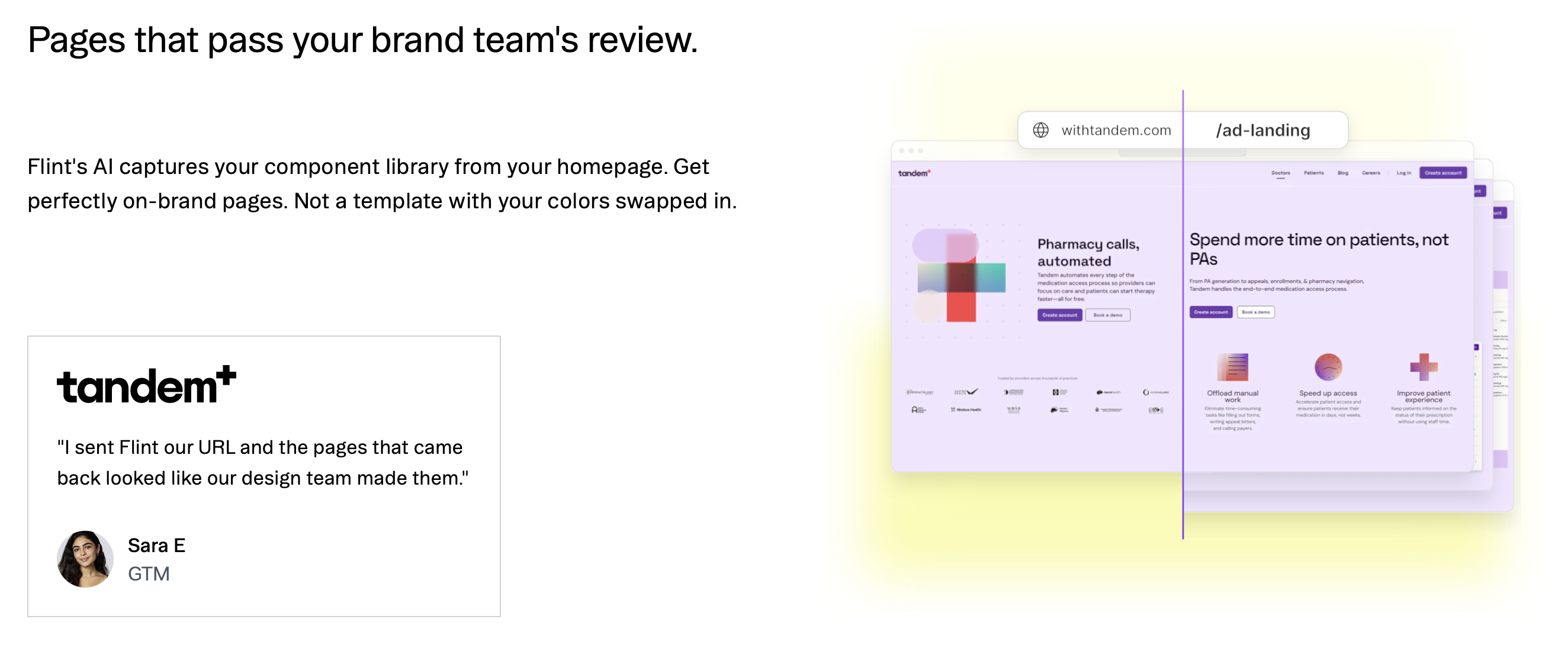
It's an interesting case from a marketing perspective because the exact same product could work with very different positioning.
When it launched a few months ago it was about websites that update themselves. The idea was that AI search tools need constantly up-to-date information to mention you (for example how your product stacks up against a new competitor).
This was probably the vision for the future that they plan to build but the tool isn't there yet.
So for now they're positioning it as a landing page builder that can scale custom pages for a bunch of use cases. Things like Google Ads campaigns where you need a dedicated page for every keyword, A/B testing different variations to see what converts better and so on.

They got some good PR at launch with links and mentions from authoritative sites like TechCrunch.
But despite that if I ask AI search tools for relevant questions Flint doesn't seem to come up yet.
I think that's because of the positioning change. Most sites talked about Flint as a tool to make autonomous websites and that's still what AI associates the product with. So it will take some work to show up with the new angle.
What I'd do is another PR push to appear on popular sites again but this time with the new positioning. Force the association between the Flint brand and "landing page builder”.
The other thing I'd do is dogfood the product harder.
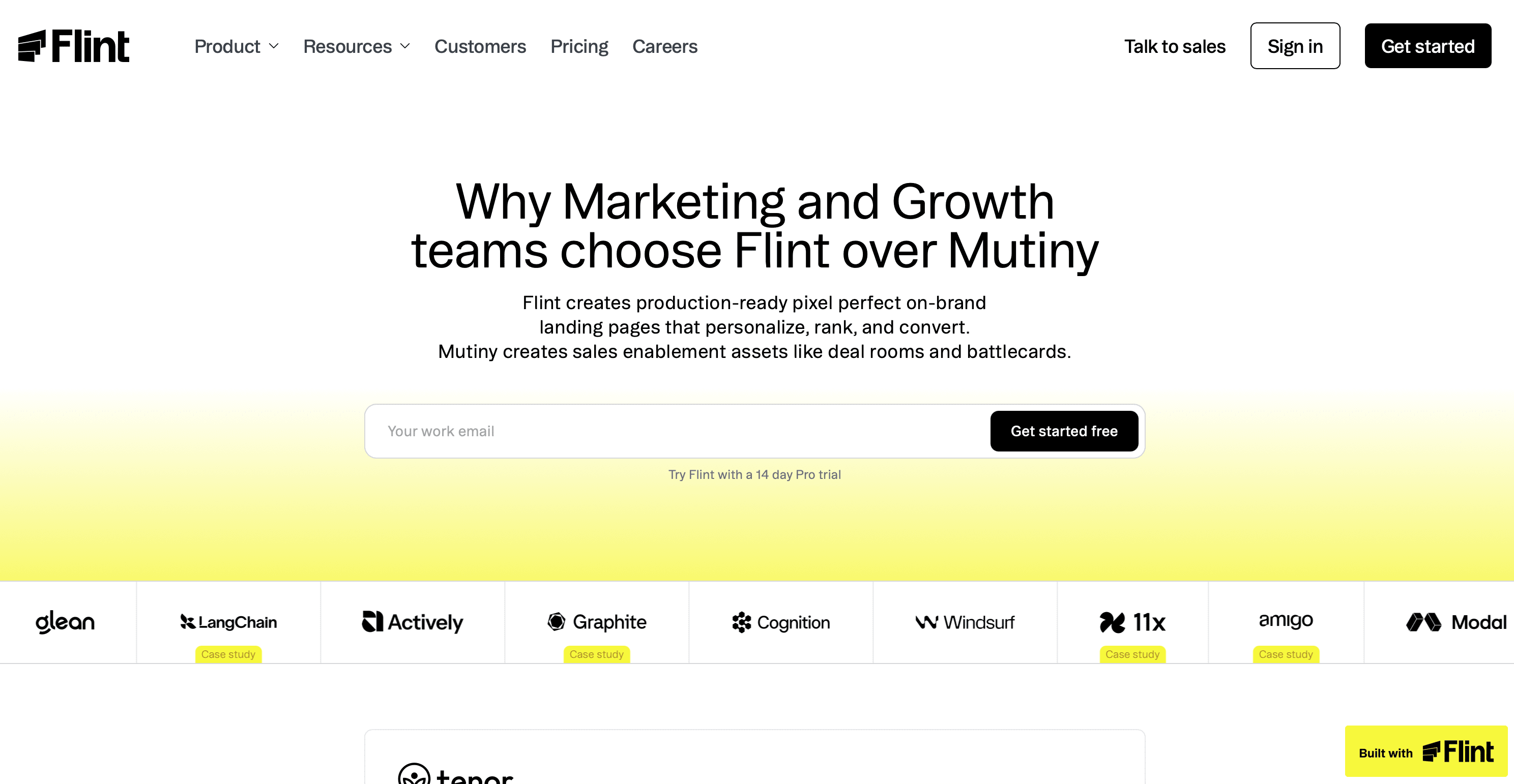
Imagine a marketer looking for a landing page tool, finding Flint through a search and landing on a page that's been built by Flint itself (visible through the "built with Flint" badge) and looks great.
That's meta in the best way and it would build a lot of credibility for the product.
They're already doing something like this but on a small scale with direct competitor comparisons.
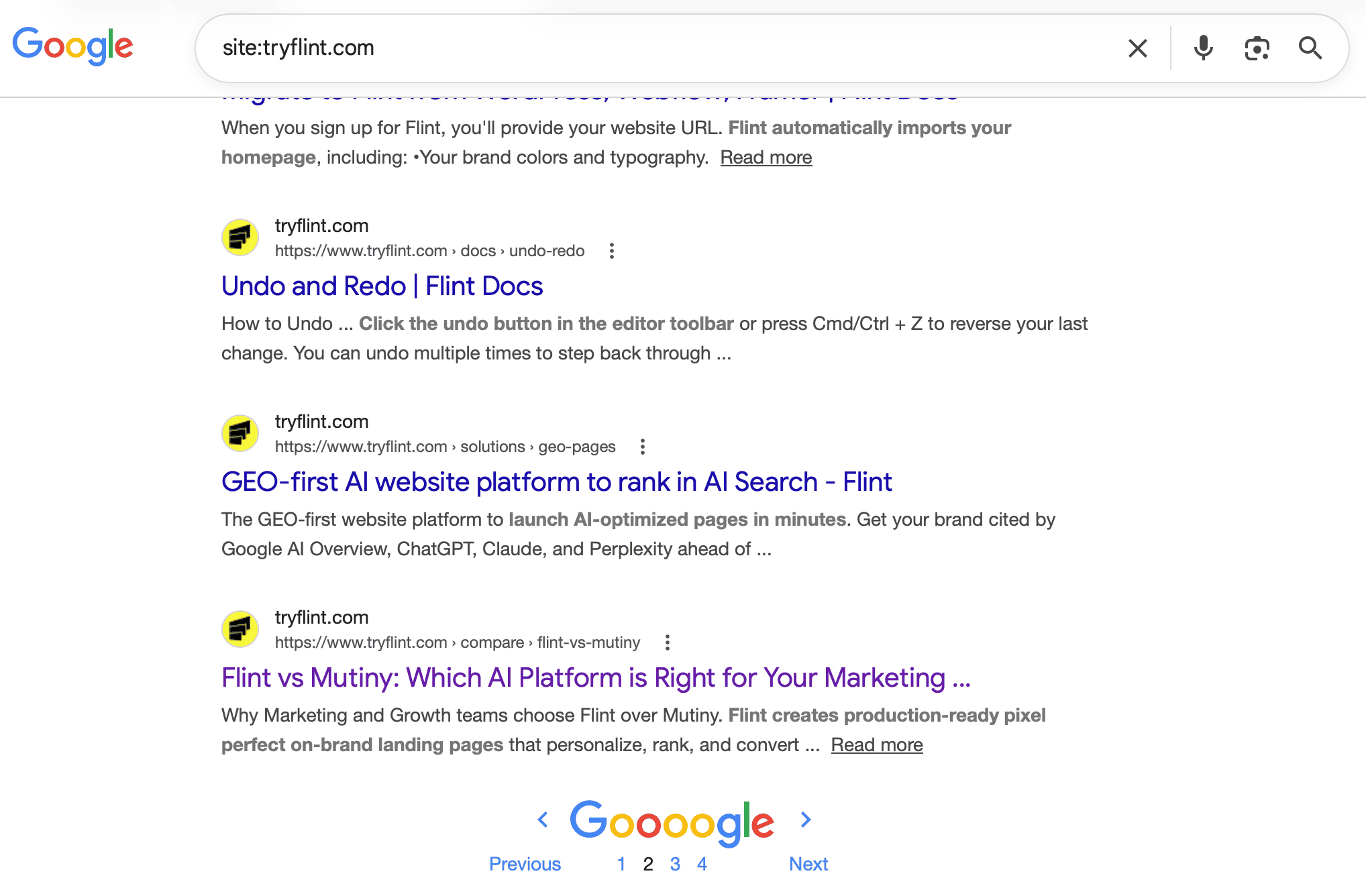
Here's where I'd focus first:
Ready to switch (highest intent, they’ve already decided they need this category, just picking a vendor): "Unbounce alternative," "Instapage alternative," "Mutiny alternative"
Ready to buy a category (they know what they want, searching for the best option): "AI landing page builder," "programmatic landing pages tool"
Solving a specific problem (problem-aware, evaluating approaches): "Google Ads landing page automation," "ABM landing pages," "generative engine optimization landing pages"
Stack-fit check (already considering tools, checking compatibility): "landing pages for Webflow," "landing pages for Framer," "landing pages for Next.js"
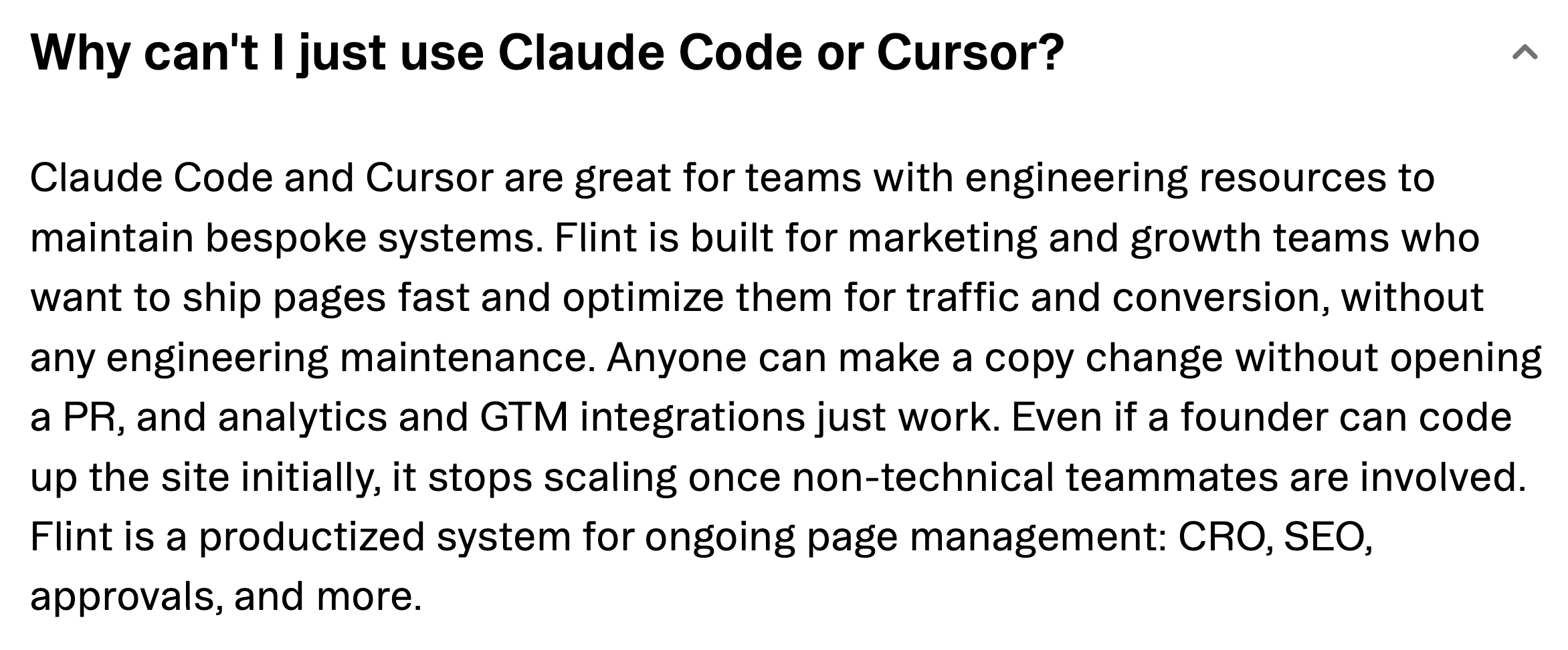
Marketers will have doubts. They're not technical after all.
Things like: can I just do this with Claude? Is it really possible to use it on the same domain? How close to the original do the landing pages actually look?
Flint does a good job answering these throughout the site but some of them are so crucial that they're part of the differentiation. I'd answer them directly in the hero section.
I'm not a fan of what I call the fake free demo. You input something, get excited for a second, then they ask you to sign up to continue. Most people aren't convinced enough at that point and they quit.
I get it. When there's AI involved there are costs. So in this case I think it would be much better to show a pre-built demo first. Then ask users to write their own prompt. If they've stuck around that long they're more likely to actually want the product and sign up rates will be a lot higher.

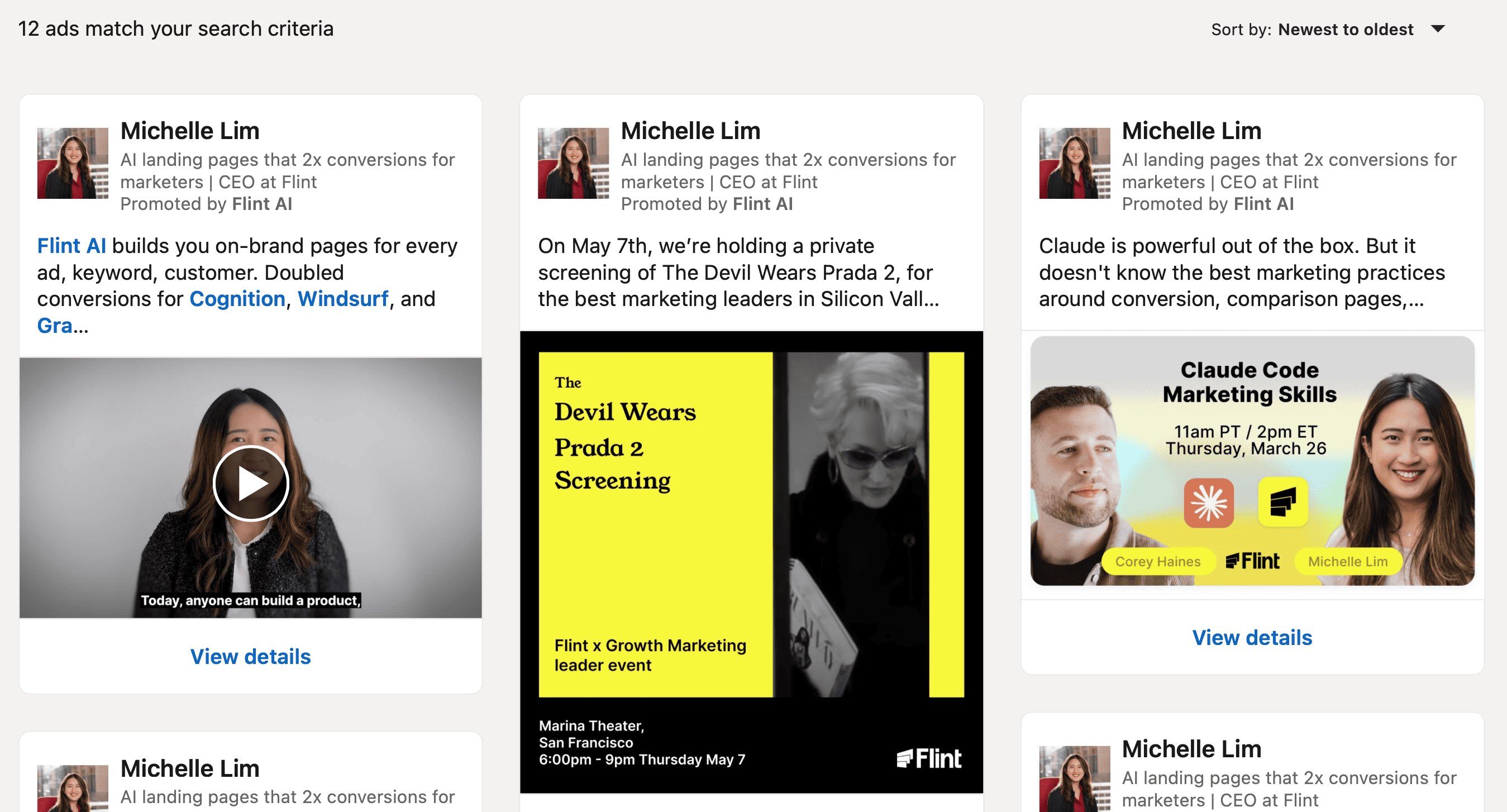
On social media they are going all in on founder-led content. Especially on LinkedIn which is definitely the best platform for this.
This makes sense when you consider that the founder is an ex-growth person so has a network built over years that matches exactly Flint's ideal ICP.
Content is very good. Nothing to change. It's a mix of personal stories (hiring an ex intern colleague), product wins (got featured by OpenAI), links (a webinar on how to use Claude Code for marketers), etc.
They're also using the Flint product page to promote the founder posts, putting some ad budget behind them to get even more reach.
What I'd probably do would be to pair this with some more traditional ads ran by the page with a variety of creatives to retarget people who interacted with these personal posts.
To push growth even further they can't rely only on one person talking about Flint. They need a lot more marketers talking about it too.
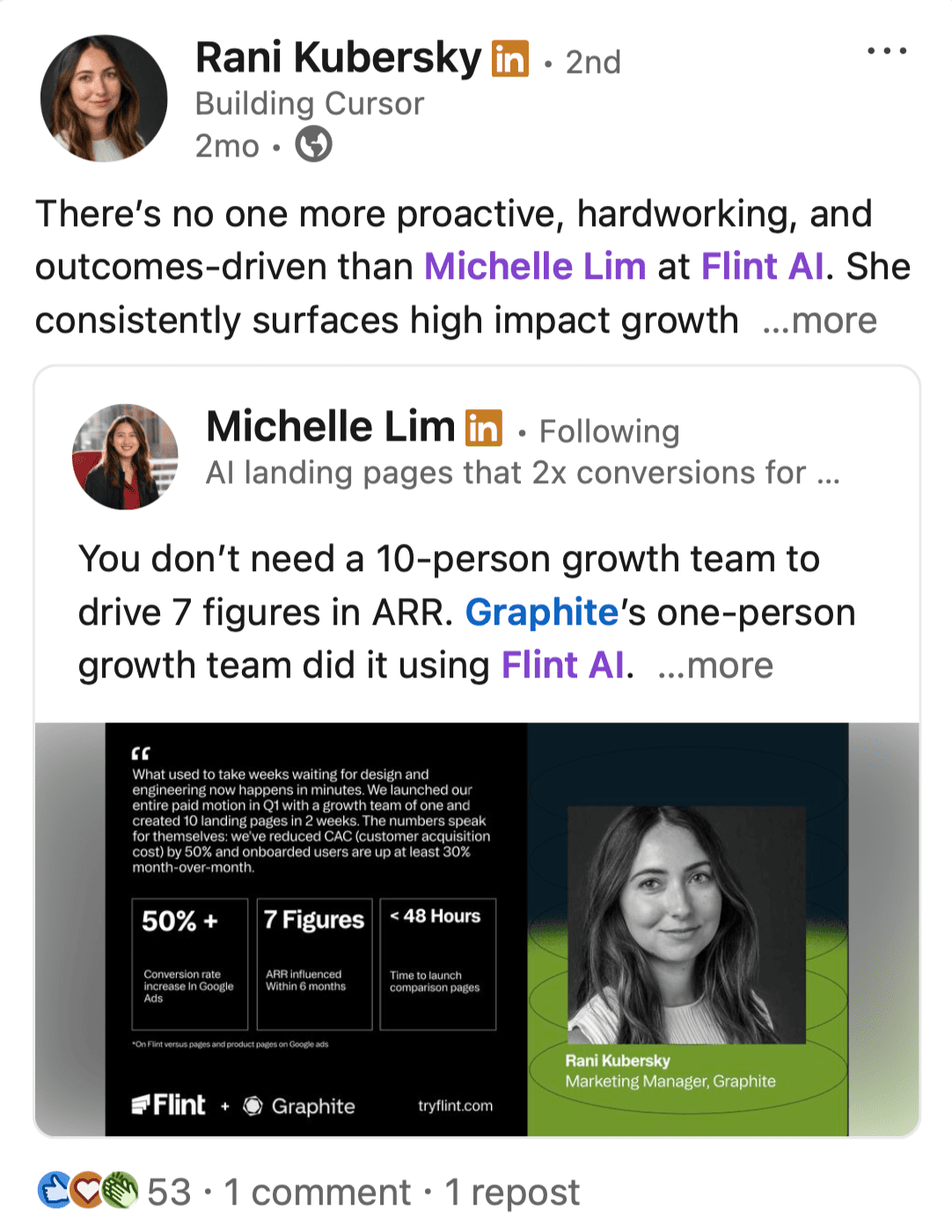
What they did so far was smart. Essentially turning some of their customers' experience into social content with an exchange of shoutout. I tell my network the story of how you used my product and vice versa. Both networks get exposed to a new product they didn't know. Win win.
But to really scale this they need a more structured influencer program. One idea might be creating an insider program.
Recruit 10 to 20 respected operators in the space. Give them free access, a private Slack with the product team and real influence over the roadmap. No content obligation. It's a long game but it's where the best word of mouth comes from.
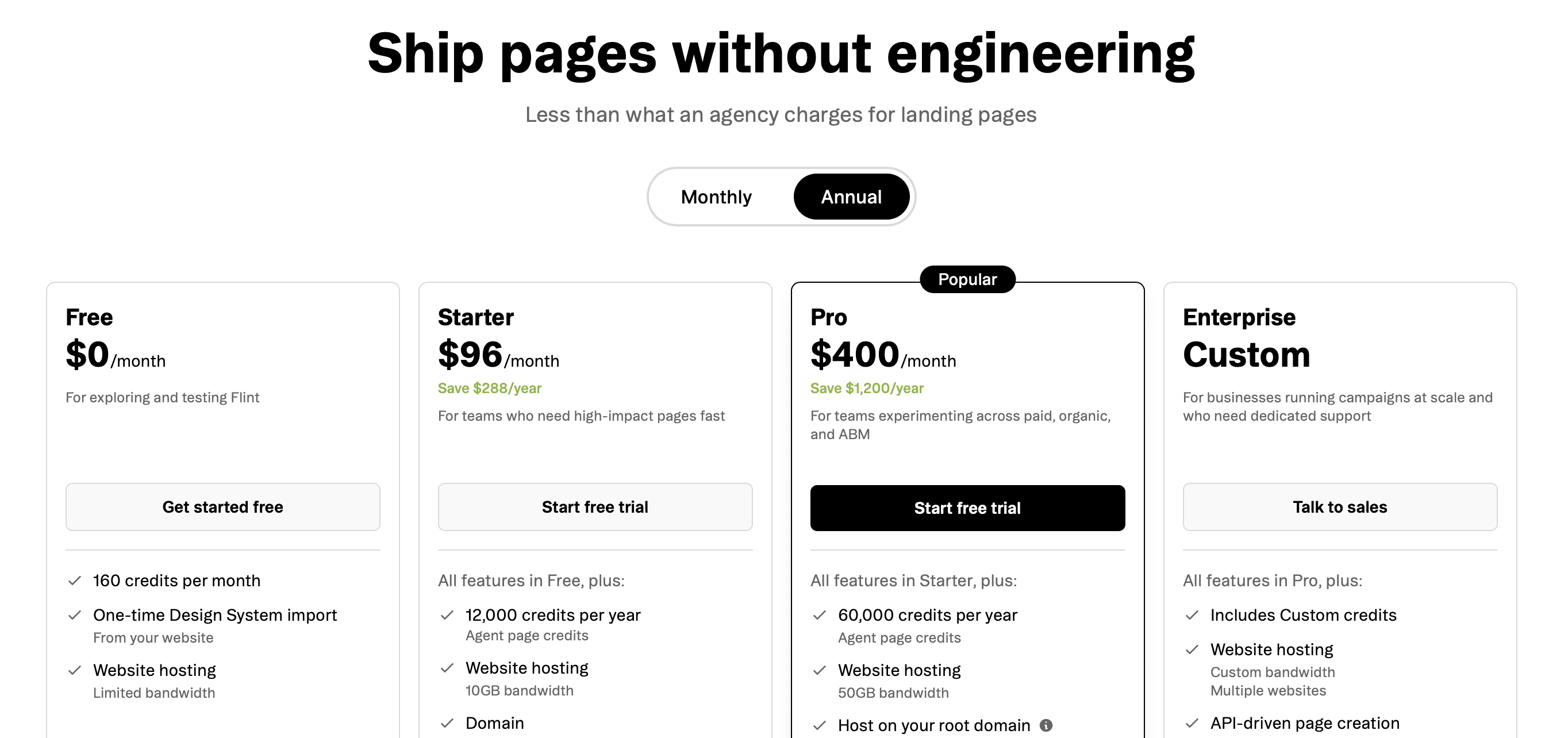
Interestingly Flint has both a free plan and a 14 day free trial. As much as I love freemium I would probably remove it here. I guess one of the reasons they added it is as a growth play so sites would display the “built with" badge.
But no serious business would run paid ads to a landing page with a badge like that. It looks amateur. And the free plan doesn't have enough credits to create a decent number of pages which undermines the badge play anyway.